- Your cart is empty
- Continue Shopping


Price range: $380.00 through $420.00
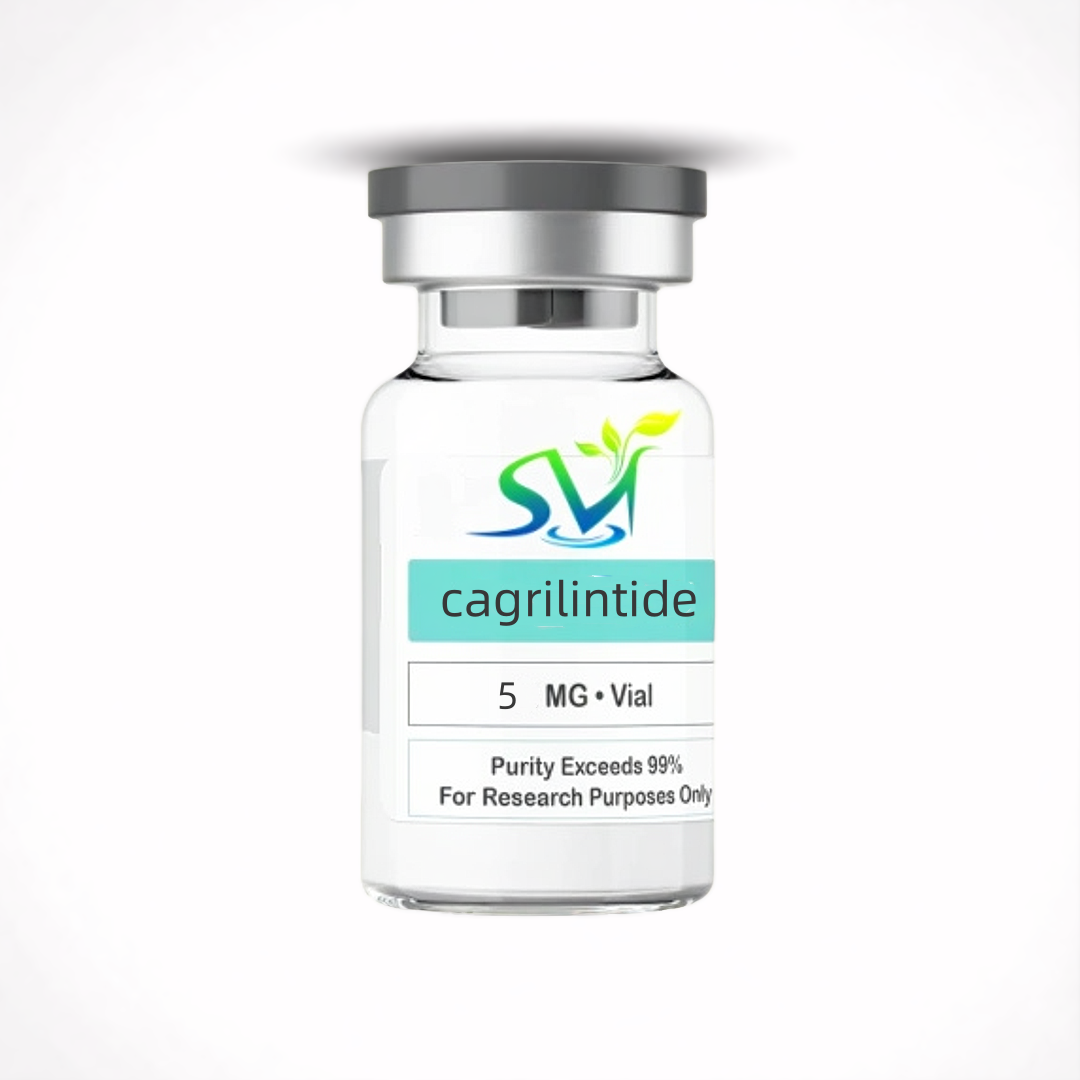
What is Cagrilintide?
Cagrilintide (also known by codes such as AM833 or NNC0174-0833) is a long-acting synthetic analogue of amylin, a hormone co-secreted with insulin from pancreatic beta cells. It is engineered to act also at calcitonin receptors, making it a dual agonist (amylin & calcitonin receptor agonist, sometimes shortened “DACRA”). Peptide Initiative+3PubMed+3glpbio.com+3
Its design includes structural modifications to extend its stability in the body and allow once-weekly subcutaneous dosing in clinical trial settings. Wikipedia+3Peptide Initiative+3PubMed+3
By mimicking amylin, cagrilintide slows gastric emptying, promotes satiety (feeling full), and helps reduce food intake. PubMed+2peptira.com+2
The calcitonin receptor agonism is thought to contribute to its metabolic effects, possibly enhancing weight loss beyond what amylin alone might achieve. PubMed+1
When used alone or in combination with glucagon-like peptide-1 (GLP-1) agonists (such as semaglutide), cagrilintide shows additive effects, improving appetite control and metabolic parameters. Wikipedia+3PubMed+3Drugs.com+3
In the Phase 2 trial(s), when cagrilintide is paired with semaglutide (as “CagriSema”), results show greater weight loss than either component alone. Drugs.com+2PubMed+2
In the REDEFINE-1 trial over 68 weeks in people with obesity or overweight (without type 2 diabetes), cagrilintide monotherapy achieved about 11.8% body-weight reduction, compared to about 2.3% with placebo. Drugs.com+1
The combination (CagriSema) achieved larger weight losses (around ~22-25%) in those same trials. Drugs.com+1
In overweight/obese adults with type 2 diabetes, CagriSema also showed improved glucose control and weight reduction versus placebo. Drugs.com+1
Dosing used in many studies is once weekly, typically 2.4 mg for cagrilintide when used in trials. Wikipedia+3Peptide Initiative+3BioSpace+3
Safety profile: Most common adverse events are gastrointestinal (nausea, sometimes vomiting or constipation), which tend to be mild to moderate and often lessen over time. PubMed+2Drugs.com+2
Regulatory / approval status: Not yet approved for general clinical use; cagrilintide is still under clinical development. The combination drug CagriSema (cagrilintide + semaglutide) is also being trialed. Drugs.com+2Wikipedia+2
Weight management in persons with overweight or obesity (with or without comorbidities). PubMed+1
Type 2 diabetes management: by improving glycemic control via appetite regulation and possibly influencing insulin/glucagon balance. Drugs.com+2Wikipedia+2
Combination therapies: boosting weight loss or metabolic benefit when combined with GLP-1 receptor agonists. PubMed+2Wikipedia+2
As with many obesity or metabolic drugs, not everyone responds the same; individual variability is significant.
Gastrointestinal side effects are the main tolerability concern. Proper titration, medical supervision, and patient monitoring are important.
Long-term safety data is still being collected; cardiovascular outcome trials and longer follow-ups are necessary. Drugs.com+1
It is investigational: not widely available, and not approved in many jurisdictions. Use should be within regulated trials or under research oversight.
| Optional specification | 5mg*10vails, 10mg*10vails |
|---|