- Your cart is empty
- Continue Shopping


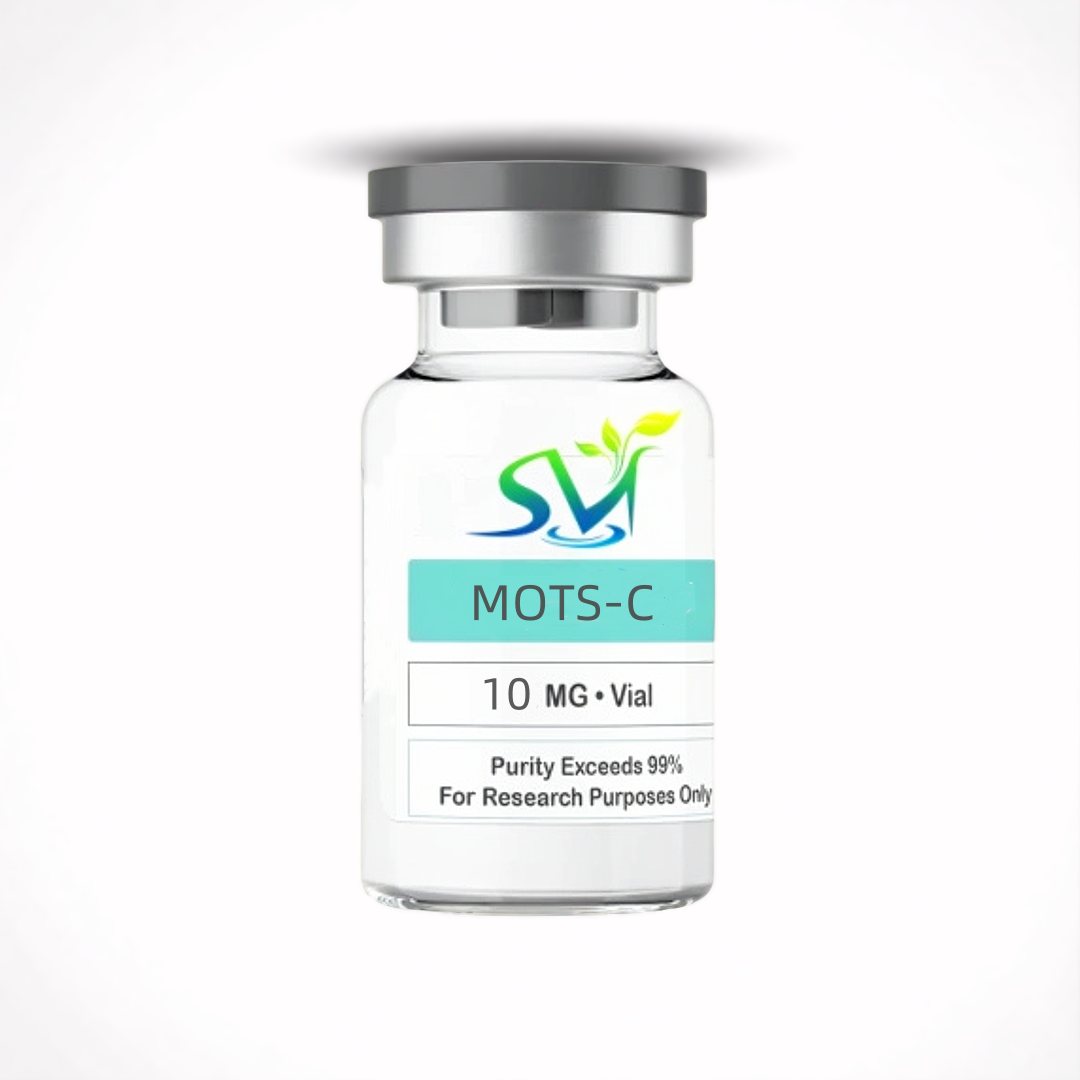
Price range: $320.00 through $480.00
In the world of anti-aging and metabolic health, a groundbreaking discovery has shifted our understanding of how our bodies regulate energy and age. This discovery is MOTS-c, a mitochondrial-derived peptide that acts as a powerful hormonal signaler. Often referred to as an “exercise-mimetic,” MOTS-c is capturing the attention of scientists, biohackers, and wellness enthusiasts for its potential to combat age-related weight gain, improve metabolic function, and enhance overall vitality. This guide will dive deep into what MOTS-c is, how it works, its potential benefits, and the current state of research.
MOTS-c (Mitochondrial Open Reading Frame of the 12S rRNA-c) is not just another supplement; it’s a naturally occurring peptide encoded within the DNA of our mitochondria—the powerhouses of our cells.
For decades, scientists believed that mitochondrial DNA only contained instructions for building proteins essential for energy production. The discovery of MOTS-c in 2015 challenged this paradigm. It revealed that the mitochondria can also send out messenger molecules that influence the entire cell’s behavior, particularly how it metabolizes nutrients.
In simple terms, MOTS-c is a signal that helps coordinate your body’s metabolic response to diet and exercise, making it a crucial regulator of health and longevity.
The mechanism of MOTS-c is what makes it so unique. Its primary action revolves around optimizing metabolic homeostasis.
AMPK Activation: MOTS-c primarily works by activating the enzyme AMPK (AMP-activated protein kinase). AMPK is a cellular energy sensor. When activated, it signals that cellular energy is low, much like what happens during exercise or calorie restriction.
Glucose Metabolism: It encourages cells to take up and use glucose from the bloodstream more efficiently, which helps maintain healthy insulin sensitivity.
Fatty Acid Metabolism: MOTS-c promotes the breakdown of stored fats for energy, preventing excessive fat accumulation.
Folates & Purine Synthesis: Research indicates it influences the folate-methionine cycle, which is critical for cellular repair and generating purines, the building blocks of DNA and RNA.
By mimicking the beneficial metabolic effects of physical activity, MOTS-c helps “re-tune” the body’s metabolic set point, especially as it ages.
Based on preclinical and emerging human studies, here are the most prominent MOTS-c benefits:
Enhances Insulin Sensitivity: This is one of its most well-documented effects. By improving how the body uses glucose, MOTS-c can help maintain healthy blood sugar levels.
Promotes Weight Loss and Reduces Fat Accumulation: It encourages the body to burn fat for fuel and can help prevent diet-induced obesity.
Increases Exercise Capacity: Studies on mice showed that MOTS-c treatment significantly improved running endurance and performance.
Supports Muscle Strength and Function: It may help protect against age-related muscle loss (sarcopenia) by improving metabolic efficiency in muscle tissue.
Anti-Aging Effects: As a peptide linked to metabolic health and cellular stress resistance, MOTS-c is considered a promising anti-aging compound. It is thought to help counteract the metabolic slowdown associated with aging.
Improves Overall Metabolic Health: Its combined effects on glucose, lipids, and mitochondrial function contribute to overall systemic health.
How does MOTS-c stack up against other popular peptides?
MOTS-c vs. AOD9604: Both are studied for fat loss, but their mechanisms differ. AOD9604 is a modified fragment of Growth Hormone that works on fat metabolism. MOTS-c is mitochondrial-based and works more broadly on metabolic regulation via AMPK.
MOTS-c vs. Tesamorelin: Tesamorelin is a growth hormone-releasing hormone analog. It primarily works by increasing the body’s own production of Growth Hormone. MOTS-c does not directly influence the GH axis; its effects are centered on mitochondrial and metabolic signaling.
It’s crucial to understand that while the initial research on MOTS-c is incredibly promising, much of it has been conducted in animal models. Human clinical trials are ongoing but still in their relative infancy.
Is MOTS-c FDA Approved? No, MOTS-c is not currently approved by the FDA for the treatment or prevention of any disease. It is available for research purposes.
Safety Profile: In studies conducted so far, MOTS-c has shown a favorable safety profile with no significant adverse effects reported.
Dosage: There is no universally established human dosage for MOTS-c. Any usage should be guided by a qualified healthcare professional familiar with peptide therapies.
What is MOTS-c used for?</summary>** MOTS-c is primarily researched for its potential to improve metabolic health, including enhancing insulin sensitivity, promoting weight loss, increasing exercise capacity, and combating age-related metabolic decline.
Is MOTS-c a steroid? No, MOTS-c is not a steroid. It is a naturally occurring peptide, which is a short chain of amino acids. It works through entirely different signaling pathways.
What are the side effects of MOTS-c? Based on current research, MOTS-c appears to be well-tolerated. No serious side effects have been reported in scientific studies, but long-term human data is still needed.
Where can I get MOTS-c? MOTS-c is available through specialized compounding pharmacies with a prescription in some countries, and as a research chemical from reputable peptide suppliers. It is essential to consult a doctor before considering its use.
MOTS-c represents a thrilling frontier in our understanding of metabolism and aging. As a mitochondrial-derived peptide, it offers a unique approach to enhancing metabolic function, mimicking some of the most beneficial effects of exercise and diet. While more human research is needed to fully unlock its therapeutic potential, the current science points to MOTS-c as a key player in the future of longevity and metabolic medicine. As always, any decision to use peptides should be made in consultation with a knowledgeable healthcare provider.
| Optional specification | 10mg*10vials, 40mg*10vials |
|---|