- Your cart is empty
- Continue Shopping


Price range: $300.00 through $310.00
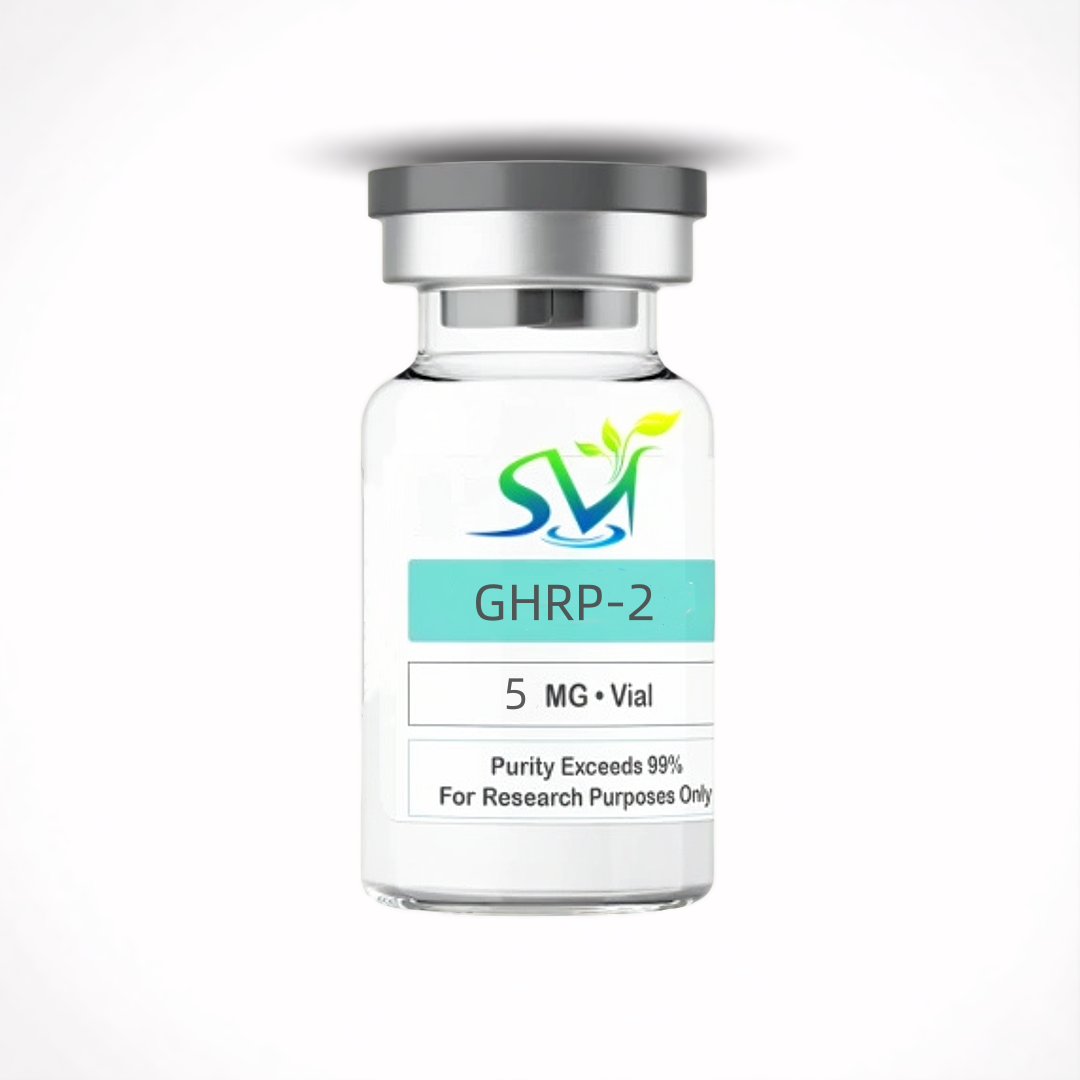
GHRP-2 Acetate is a synthetic peptide. Let’s break down the name:
GHRP: Stands for Growth Hormone-Releasing Peptide. It is part of a class of peptides known as secretagogues, which stimulate the secretion of another hormone.
-2: Denotes it as the second in a series of related synthetic peptides (others include GHRP-6 and Ipamorelin).
Acetate: Refers to the salt form (Acetic acid salt), which is common for peptide stability and solubility.
In essence, GHRP-2 is a synthetic molecule designed to potently stimulate the body’s own pituitary gland to release growth hormone (GH).
Unlike natural Growth Hormone-Releasing Hormone (GHRH), which works on one pathway, GHRP-2 has a unique and powerful dual mechanism:
Ghrelin Receptor Agonism: Its primary action is by binding to and activating the ghrelin receptor (also known as the growth hormone secretagogue receptor or GHS-R) in the pituitary gland and hypothalamus. Ghrelin is the “hunger hormone,” which explains GHRP-2’s notable side effect of increasing appetite.
Antagonism of Somatostatin: It also works by indirectly counteracting somatostatin, the hormone that normally inhibits GH release. By reducing somatostatin’s effect, it removes the “brake” on growth hormone production.
This two-pronged approach makes GHRP-2 a very potent stimulator of natural GH pulsatility.
The effects are a direct result of the increased pulse of growth hormone, which in turn stimulates the liver to produce Insulin-like Growth Factor-1 (IGF-1).
Clinical/Research Context:
It has been investigated as a diagnostic tool for GH deficiency.
Research has explored its potential in conditions where stimulating natural GH pulsatility is beneficial, though it has not been widely approved as a licensed drug.
Performance & Aesthetics Context (Off-Label/Underground Use):
Increased Muscle Mass: Promotes anabolic (muscle-building) effects.
Fat Loss: Enhances lipolysis (the breakdown of fat).
Improved Recovery: Accelerates repair of muscles and connective tissues after exercise.
Enhanced Sleep Quality: GH pulses are naturally highest during sleep, and users often report deeper sleep.
Joint & Tendon Repair: Increased collagen synthesis can improve joint health and heal injuries.
Increased Appetite: A pronounced effect, which can be desirable for those trying to “bulk up” but problematic for others.
| Peptide | GH Release Potency | Key Distinguishing Feature | Hunger Stimulation |
|---|---|---|---|
| GHRP-6 | High | Very strong hunger stimulation. | Very High |
| GHRP-2 | High (similar to GHRP-6) | Moderate hunger stimulation. | Moderate |
| Ipamorelin | Lower (more mild) | Minimal hunger; does not affect cortisol or prolactin. | Very Low |
A key point is that GHRP-2, like GHRP-6, can cause a slight increase in cortisol and prolactin levels, which is not considered ideal. Ipamorelin was developed to be more selective and avoid this.
It is crucial to note that there is no standardized, medically approved dosing protocol for off-label use. The following is based on common practices within the peptide community.
Administration: It is administered via subcutaneous (SubQ) injection, typically into the belly fat.
Common Dosing Range: 100-300 mcg per injection.
Frequency: Typically 2-3 times per day. Because it mimics the body’s natural pulsatile release, it is often dosed:
Upon waking (fasted)
Post-workout
Before bed (at least 2 hours after the last meal to avoid blood glucose spikes)
Cycles: Users often “cycle” the peptide, for example, using it for 3 months followed by 1 month off, to prevent desensitization of the pituitary gland.
Increased Appetite: Can be intense and lead to unwanted weight gain if not managed.
Elevated Cortisol and Prolactin: Chronic elevation can have negative health consequences, including impaired immune function, water retention, and (for prolactin) potential sexual side effects.
Water Retention (Edema): A common initial side effect.
Carpal Tunnel Syndrome: Tingling or numbness in the hands due to fluid pressure on the nerve.
Insulin Resistance: High GH can make cells less sensitive to insulin, potentially raising blood sugar levels. Monitoring is advised.
Desensitization (Tachyphylaxis): Using it too frequently or for too long can make the pituitary gland less responsive.
Purity & Sourcing Risk: As a research chemical, products are sourced from unregulated labs, posing risks of contamination, incorrect dosage, or mislabeling.
GHRP-2 is not approved by the FDA for human treatment.
It is legally sold for “research purposes only” in laboratory settings (e.g., in vitro or animal research). It is not intended for human consumption.
Its sale and possession for human use exist in a legal gray area and are often marketed as “not for human consumption” to bypass regulations.
GHRP-2 Acetate is a potent synthetic peptide that stimulates the body’s own production of growth hormone.
It operates through a dual mechanism (ghrelin agonism & somatostatin antagonism), making it more powerful than single-pathway secretagogues.
Its effects include muscle growth, fat loss, and improved recovery, but it also causes significant hunger and can raise cortisol/prolactin.
It is a research chemical, not an approved medication. Its use carries significant risks due to a lack of long-term safety data and the unregulated nature of its production.
| Optional specification | 5mg*10vials, 10mg*10vials |
|---|