- Your cart is empty
- Continue Shopping


$332.00
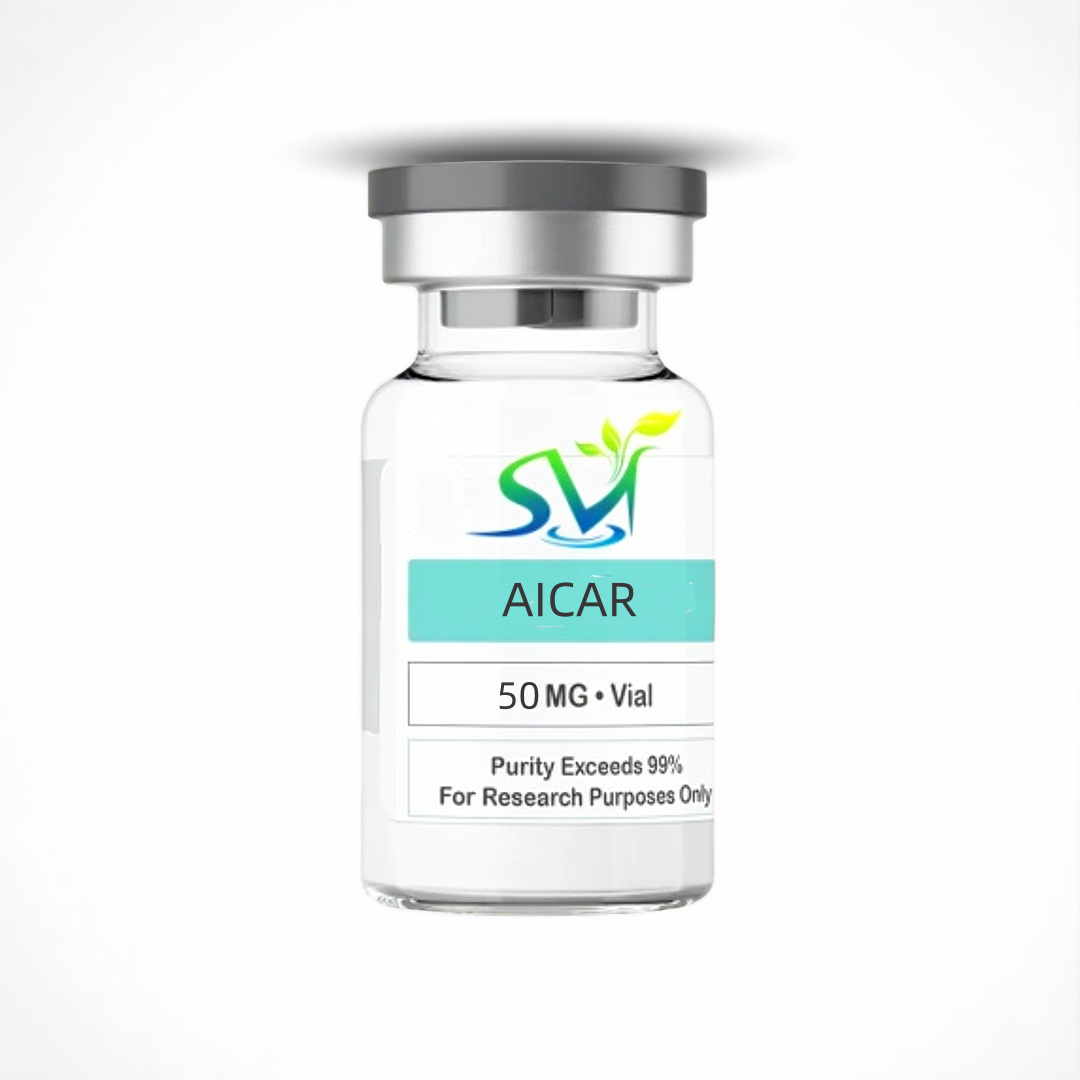
AICAR (5-Aminoimidazole-4-carboxamide ribonucleotide) is a synthetic, small-molecule drug that mimics a natural compound (ZMP) found in our cells. It is also known by its chemical name Acadesine.
Its significance comes from its ability to activate a critical cellular “energy sensor,” which has led to two very different primary contexts:
Medical Research: As a potential therapeutic for heart and metabolic conditions.
Sports Doping: As a banned “metabolic modulator” believed to enhance endurance.
AICAR’s primary mechanism is the activation of an enzyme called AMPK (AMP-activated protein kinase).
The “Energy Sensor”: AMPK is activated naturally when cellular energy levels are low (e.g., during exercise, fasting, or stress). Its job is to restore energy balance.
How AICAR Works: Once inside a cell, AICAR is converted into ZMP, which “tricks” the cell into thinking it is in a low-energy state. This leads to the activation of AMPK.
When AMPK is activated, it triggers a cascade of effects:
Increases Glucose Uptake: Muscles take in more sugar from the blood for fuel.
Increases Fatty Acid Oxidation: The body burns more fat for energy.
Suppresses Anabolic Processes: It temporarily slows down energy-consuming processes like the synthesis of fatty acids, cholesterol, and proteins.
The nickname “Exercise in a Pill” or “The Couch Potato Pill” originated from a landmark 2008 study published in Cell.
The Mouse Study: Researchers gave AICAR to sedentary mice for four weeks.
The Result: These mice significantly outperformed untreated mice in treadmill endurance tests—running 44% longer and 23% farther—without any prior exercise training.
The Implication: AICAR seemed to genetically and metabolically rewire the muscles to be more endurance-oriented, mimicking the effects of exercise.
This finding instantly catapulted AICAR into the spotlight, both in scientific and athletic circles.
Despite the doping notoriety, AICAR has been seriously investigated for its therapeutic potential:
Ischemia-Reperfusion Injury: This is damage that occurs when blood supply returns to tissue after a period of lack of oxygen (e.g., during a heart attack or stroke). AICAR was studied in large Phase 3 clinical trials (from ~2006-2010) as a protective agent for patients undergoing coronary artery bypass graft (CABG) surgery. However, the results were ultimately not positive enough for regulatory approval.
Metabolic Diseases: By promoting fat burning and glucose uptake, AICAR was a candidate for treating type 2 diabetes and metabolic syndrome.
Other Areas: Research has explored its use in treating claudication (pain from blocked arteries in the legs) and even certain cancers, though this remains preliminary.
The 2008 mouse study was a red flag for anti-doping agencies.
The Promise for Athletes: The potential to increase endurance without the hard work of training was an obvious temptation. It was believed to be particularly effective when used in a stack with other compounds like GW501516 (a PPARδ agonist), which also affects endurance.
WADA Ban: The World Anti-Doping Agency (WADA) banned AICAR in 2009 by placing it on its prohibited list under the category of “Metabolic Modulators.”
Detection and Scandals: It has been detected in athletes. Most notably, several riders in the 2009 Tour de France were suspected of using AICAR, cementing its reputation as a doping agent in endurance sports.
The long-term safety profile of AICAR in healthy humans is not well-established. Potential risks based on animal studies and its mechanism include:
Toxicity to Pancreatic Beta Cells: There is concern that it could damage insulin-producing cells, potentially leading to diabetes—the opposite of one of its proposed benefits.
Disruption of Natural Metabolism: Artificially manipulating a core metabolic pathway like AMPK could have unforeseen consequences on liver function, immune response, and overall metabolic health.
Unknown Long-Term Effects: As a research chemical, it is not produced for human consumption, and products sold on the gray market may be impure or mislabeled.
| Compound | Primary Mechanism | Common Context | Key Difference |
|---|---|---|---|
| AICAR | AMPK Activator | Doping, Research | Mimics the energy state of exercise. Focus on endurance. |
| Cardarine (GW501516) | PPARδ Agonist | Doping, Research | Mimics the effects of endurance training on gene expression. Also banned and considered dangerous. |
| Metformin | AMPK Activator (indirectly) | Type 2 Diabetes Medication | A widely prescribed, safe diabetes drug that also activates AMPK, but through a different, more complex pathway. |
AICAR is a potent AMPK activator that can mimic some metabolic effects of exercise in animal models.
It has a serious history of clinical research for heart conditions, though it failed in late-stage trials.
Its reputation as an “exercise pill” is overstated; it mimics only the metabolic endurance aspect, not the strength, cardiovascular, or neurological benefits of real exercise.
It is a banned substance in competitive sports and is considered a significant doping risk.
Its use outside of clinical settings is not recommended due to significant unknown health risks and a lack of safety data.
| Optional specification | 50mg*10vials |
|---|