- Your cart is empty
- Continue Shopping


$450.00
Follistatin is a naturally occurring protein found in nearly all tissues in the body, with significant concentrations in the liver, skin, and skeletal muscle. It was initially discovered for its role in the reproductive system, where it binds to and neutralizes activin, a hormone that stimulates Follicle-Stimulating Hormone (FSH) secretion—hence its name.
However, its most significant role in the context of performance and physiology is its function as a key antagonist of myostatin (also known as GDF-8). Myostatin is a member of the TGF-β protein family that acts as a powerful limiter of skeletal muscle growth. By binding to and inhibiting myostatin, Follistatin effectively removes this built-in restriction, allowing for accelerated muscle hypertrophy and hyperplasia (an increase in the number of muscle fibers).
The mechanism of Follistatin is elegantly simple yet powerful. It functions as a molecular “decoy.”
Direct Binding and Neutralization: Follistatin has a very high binding affinity for myostatin. It physically binds to myostatin in the circulation and within tissues.
Prevention of Receptor Activation: By binding to myostatin, Follistatin blocks myostatin from attaching to its own receptor (the activin type IIB receptor, or ActRIIB) on the surface of muscle cells.
Blocking the “Stop Growing” Signal: When myostatin cannot bind to its receptor, the intracellular signaling cascade that tells muscle satellite cells to stop proliferating and differentiating is never initiated.
Unleashing Anabolic Potential: With the primary “brake” on muscle growth disengaged, the body’s natural anabolic processes, driven by molecules like IGF-1, can proceed with significantly less opposition, leading to dramatic increases in lean muscle mass.
Research on Follistatin, primarily in animal models and early-stage human trials, points to several remarkable benefits.
Significant Muscle Hypertrophy and Hyperplasia: This is the primary and most dramatic effect. Studies have shown that increasing Follistatin levels can lead to a double-digit percentage increase in muscle mass.
Improved Muscle Strength and Function: The increase in muscle mass translates directly to enhanced strength and physical performance.
Potential Therapeutic for Muscular Dystrophy: By counteracting the muscle-wasting processes, Follistatin is a leading candidate for treating degenerative muscle diseases like Duchenne Muscular Dystrophy (DMD).
Enhanced Metabolic Health: Increased muscle mass is a primary driver of metabolic rate. More muscle improves glucose disposal and insulin sensitivity, which can be beneficial for metabolic syndrome and type 2 diabetes.
Injury Recovery and Muscle Repair: By promoting the activation and differentiation of satellite cells, it can accelerate the repair of damaged muscle tissue.
When people refer to Follistatin in a research or biohacking context, they are most often talking about the Follistatin-344 isoform.
What it is: Follistatin-344 is a specific, 344-amino-acid splice variant of the follistatin protein. It is the predominant form found in human blood circulation.
Why it’s used: This is the isoform that has been used in most scientific studies and, anecdotally, by individuals seeking its effects. It is available as a research peptide for laboratory investigation.
Administration: Due to its protein structure, it cannot be taken orally and must be administered via injection (typically subcutaneous or intramuscular).
A significant area of development is Follistatin gene therapy. This approach involves using a viral vector (like AAV) to deliver the gene for follistatin directly into the patient’s cells. The cells then produce the follistatin protein endogenously and continuously for a prolonged period.
This method has shown staggering results in animal studies and limited human trials for muscular dystrophy, producing massive and sustained increases in muscle mass from a single treatment. However, it remains an experimental and tightly regulated medical procedure, not a readily available product.
Dosage: There is no standardized human dosage for Follistatin-344. Anecdotal reports in research communities often cite doses ranging from 50 to 100 mcg, injected once or twice daily. However, these are not medical recommendations.
Safety and Side Effects: The long-term safety profile in healthy humans is unknown. The primary theoretical concern is the potential impact on tendons and ligaments. Muscle strength may increase dramatically, but the connective tissues may not adapt at the same rate, increasing the risk of injury. Its effects on other TGF-β family members (like those involved in heart valve health) are also not fully understood.
Legal Status: Follistatin is not approved by the FDA for any cosmetic or performance-enhancement use. It is strictly a research chemical.
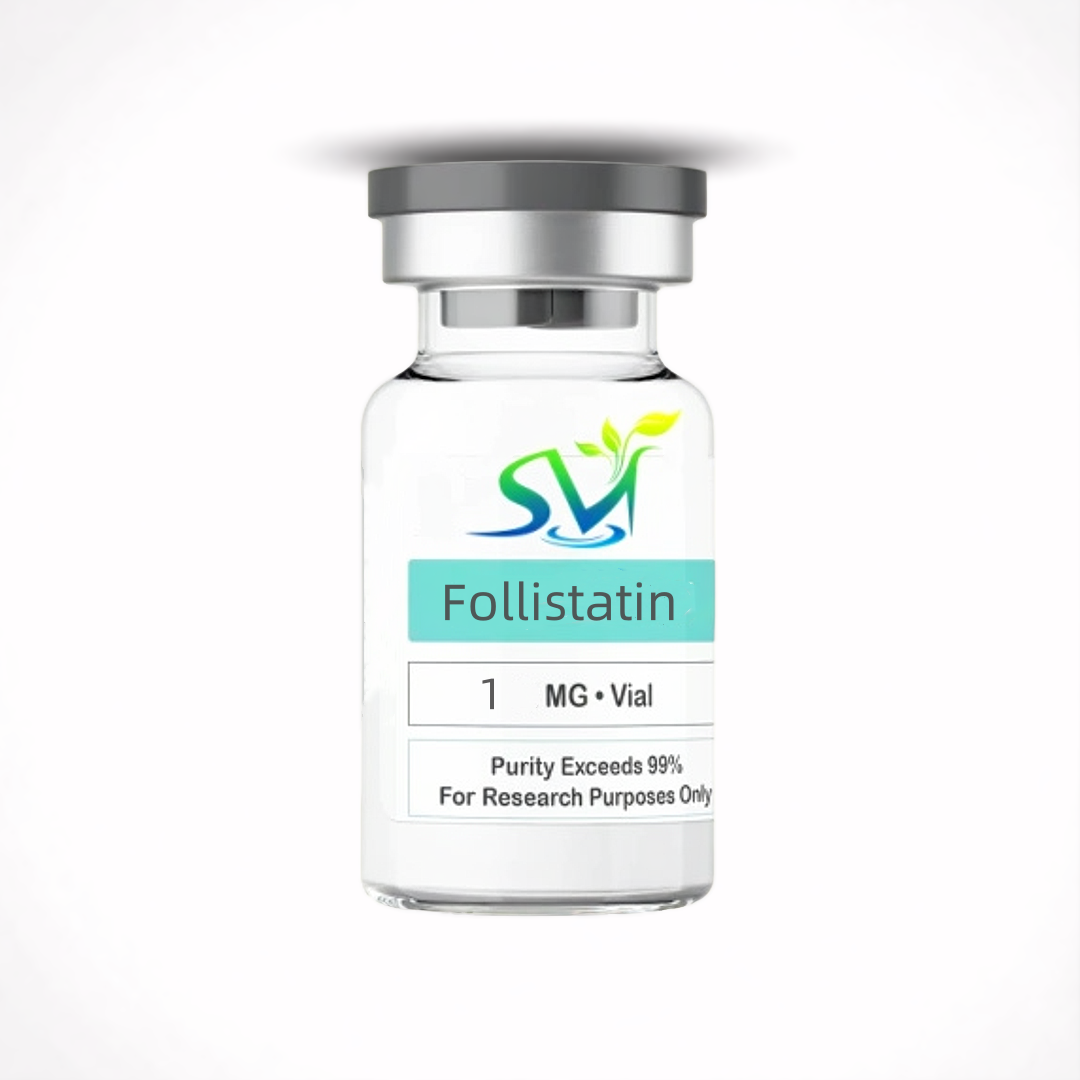
| Optional specification | 1mg*10vials |
|---|