- Your cart is empty
- Continue Shopping


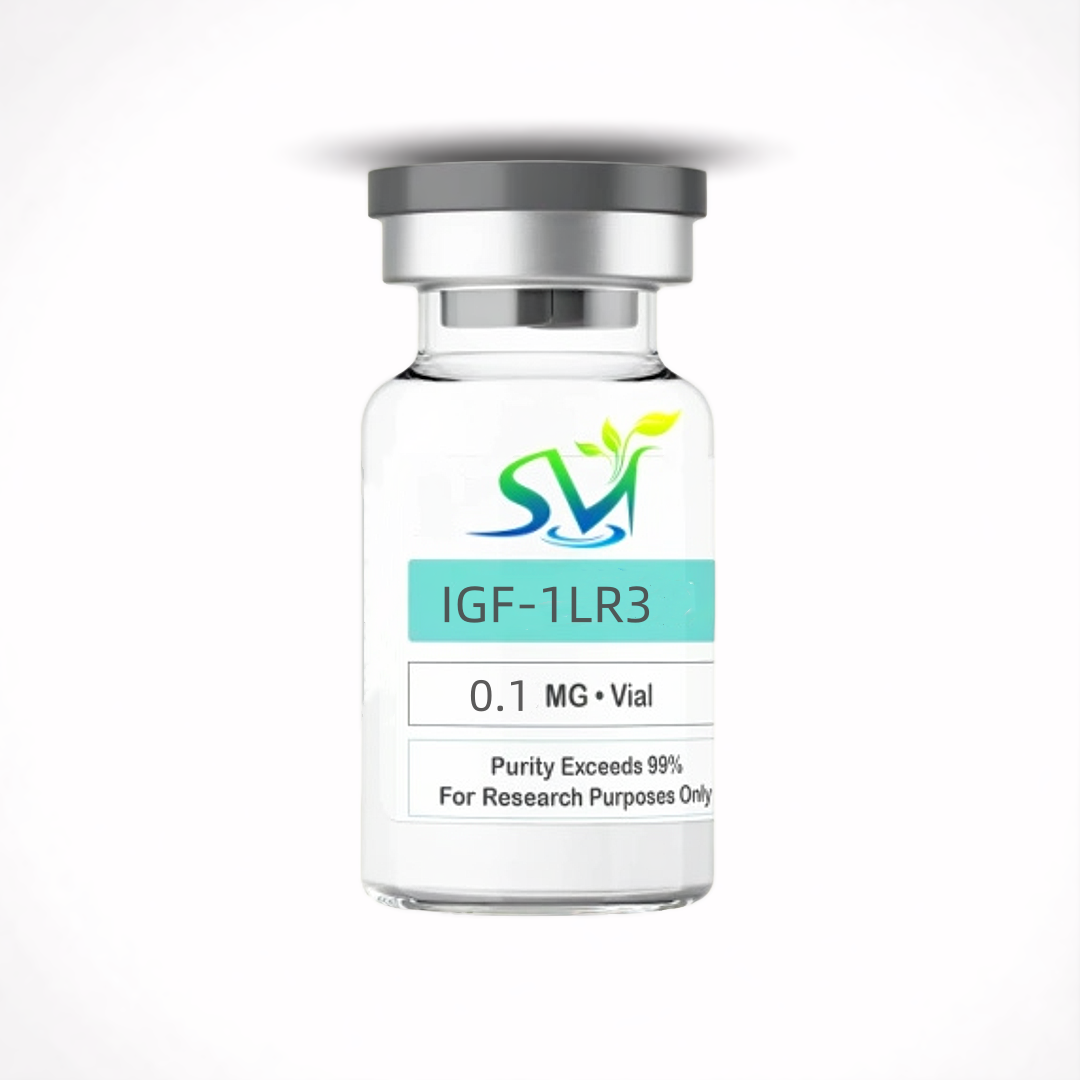
Price range: $300.00 through $480.00
IGF-1LR3 is a genetically modified analogue of Insulin-like Growth Factor 1 (IGF-1). It is significantly more potent and has a longer half-life than natural IGF-1, making it a subject of interest in research and, controversially, in performance enhancement circles.
It’s crucial to understand that IGF-1 LR3 is not approved for human use as a pharmaceutical drug and is sold explicitly for research purposes only.
To understand IGF-1 LR3, you first need to understand natural IGF-1.
Natural IGF-1: A hormone produced primarily by the liver in response to Growth Hormone (GH). Its primary role is to promote growth and anabolic (building-up) processes in almost every cell in the body, especially muscle and bone cells.
IGF-1 LR3 is an engineered version with two key changes:
An Arginine Substitution: The 3rd amino acid in the chain is replaced with Arginine (hence, “Long Arg³”). This reduces the peptide’s binding affinity for certain proteins in the blood.
A 13-Amino Acid Extension: A 13-amino acid chain is added to the “C-terminus” end of the peptide (hence, “Long R3”).
The Result of These Changes:
These modifications make IGF-1 LR3 far less likely to be bound and deactivated by IGF Binding Proteins (IGFBPs) in the bloodstream. This means:
Longer Half-Life: Its active life in the body is dramatically extended to 20-30 hours, compared to just a few hours for natural IGF-1.
Greater Potency: Because it is “free” from binding proteins for a longer period, it has more time and opportunity to interact with IGF-1 receptors on cells, producing a much stronger and more prolonged anabolic effect.
In research contexts (e.g., cell culture studies) and based on anecdotal reports from the performance-enhancing community, the effects of IGF-1 LR3 are claimed to include:
Potent Muscle Growth (Hyperplasia & Hypertrophy): It is believed to stimulate both the creation of new muscle cells (hyperplasia) and the enlargement of existing ones (hypertrophy).
Enhanced Fat Loss: It may increase the body’s affinity for using fat for energy (lipolysis).
Improved Recovery: It can accelerate the repair of muscle tissue and nervous tissue, reducing downtime between training sessions.
Increased Nutrient Uptake: Like insulin, it promotes the shuttling of glucose and amino acids into cells, making the body more anabolically efficient.
Bone and Connective Tissue Strengthening: It stimulates growth and repair in bones, tendons, and ligaments.
The power of IGF-1 LR3 is also the source of its significant dangers. Uncontrolled growth signaling can affect more than just skeletal muscle.
Hypoglycemia: This is the most common and acute risk. IGF-1 LR3 has strong insulin-like effects and can cause a severe drop in blood sugar levels, leading to dizziness, shaking, sweating, loss of consciousness, and in extreme cases, coma. Users often must carefully time carbohydrate intake around administration.
Organ Growth: IGF-1 receptors are present on all organs. Uncontrolled use can lead to the enlargement of internal organs (visceromegaly), such as the heart, liver, and kidneys. This can have severe, long-term health consequences.
Accelerated Tumor Growth: IGF-1 is a potent growth factor. If a user has any pre-existing cancerous or pre-cancerous cells (known or unknown), IGF-1 LR3 can dramatically accelerate their growth and proliferation. This is arguably the most severe long-term risk.
Edema (Water Retention): Significant fluid retention is a common side effect.
Acromegaly-like Symptoms: With prolonged, high-dose use, features can become coarse, and hands, feet, and jaw may enlarge—a condition similar to acromegaly, which is caused by excessive GH/IGF-1 in adulthood.
Insulin Resistance: Chronic use can potentially desensitize the body to its own insulin.
| Feature | IGF-1 LR3 | Human Growth Hormone (HGH) | Natural IGF-1 | Insulin |
|---|---|---|---|---|
| Primary Action | Directly stimulates IGF-1 receptors | Stimulates the liver to produce natural IGF-1 | Binds to IGF-1 receptors (short-lived) | Shuttles glucose into cells |
| Half-Life | 20-30 hours | Several hours | A few hours | Minutes to a few hours |
| Key Risk | Hypoglycemia, Organ Growth, Cancer risk | Carpal tunnel, insulin resistance, acromegaly | Similar to LR3 but less pronounced | Acute, fatal hypoglycemia |
| Status | Research Chemical | Controlled Prescription Drug | Prescription (e.g., Increlex) | Controlled Prescription Drug |
IGF-1 LR3 is a powerful, long-acting research peptide with potent anabolic and metabolic effects. Its theoretical potential for promoting tissue growth is immense, which is why it remains a key tool in scientific research.
However, for human use, its risk profile is extremely high. The potential for life-threatening hypoglycemia, unwanted organ growth, and the acceleration of cancer makes it one of the most dangerous compounds experimented with in the performance-enhancement world.
| Optional specification | 0.1mg*10vials, 1mg*10vials |
|---|