- Your cart is empty
- Continue Shopping


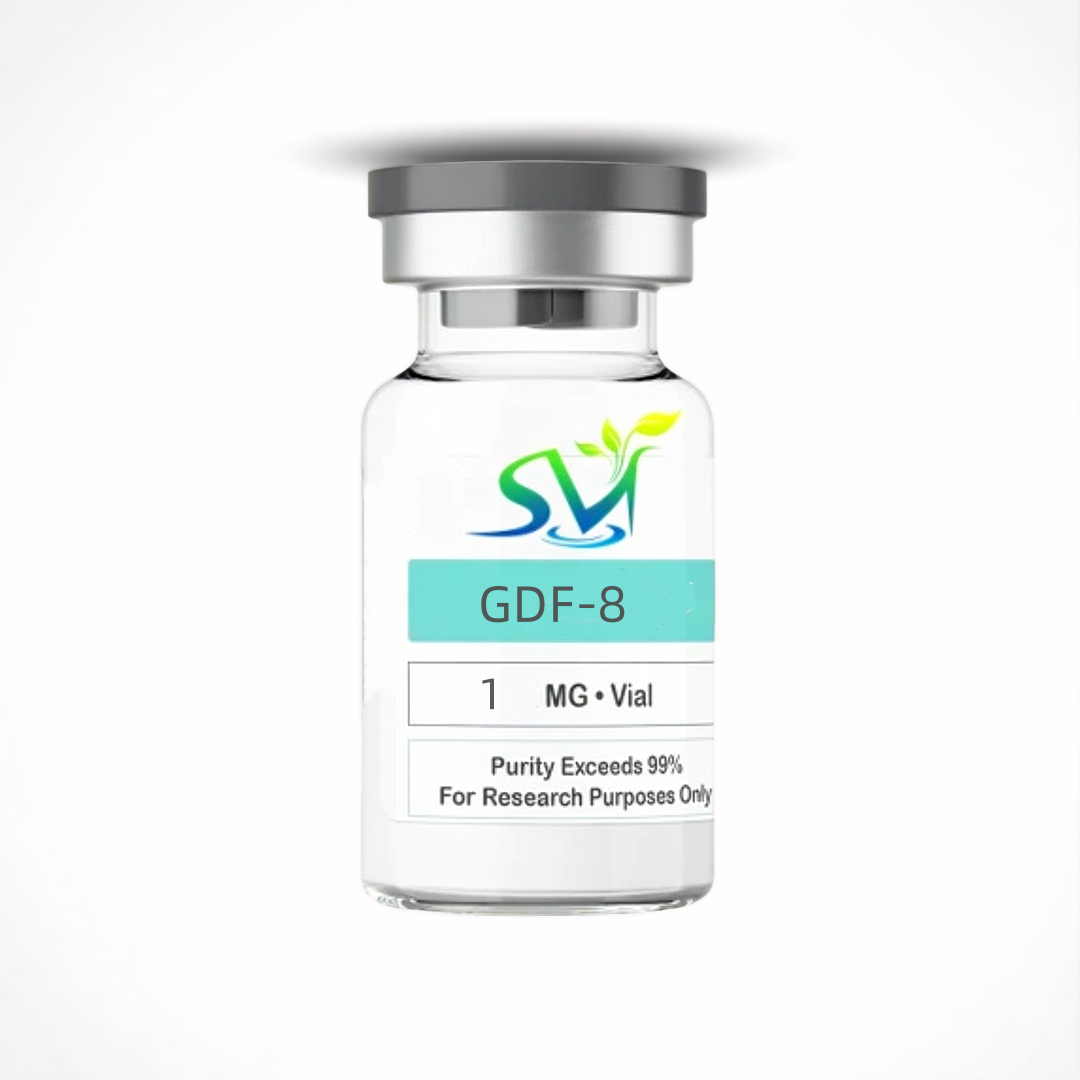
$350.00
PEG MGF is a modified version of Mechano Growth Factor (MGF).
MGF (Mechano Growth Factor): This is a splice variant of Insulin-like Growth Factor-1 (IGF-1) that is naturally produced in muscle tissue in response to mechanical stress (e.g., weight training). Its primary role is to activate muscle stem cells (satellite cells), promoting local muscle repair and growth.
PEG (Polyethylene Glycol): This is a modification where a PEG molecule is attached to the MGF peptide.
The purpose of the PEGylation is to significantly increase the peptide’s half-life in the body. Natural MGF has an extremely short half-life (a few minutes), making it impractical for use. PEG MGF has a half-life of several hours, making it a viable, though still experimental, compound.
PEG MGF works differently from systemic growth hormone secretagogues. Its action is more localized and specific to muscle tissue:
Satellite Cell Activation: When injected, PEG MGF travels to muscle tissues and binds to receptors on muscle satellite cells (dormant muscle stem cells).
Proliferation and Differentiation: This binding signals the satellite cells to activate, multiply (proliferate), and then fuse with existing muscle fibers or create new ones (differentiate). This process is called hyperplasia (increasing the number of muscle fibers) in addition to hypertrophy (increasing the size of existing fibers).
Localized Anabolic Effect: Unlike systemic IGF-1, which affects the entire body, MGF is designed to have a more targeted effect on the muscles, particularly those that are damaged or stressed.
In the bodybuilding and athletic communities, PEG MGF is used for:
Promoting Muscle Growth: Primarily by increasing the number of muscle fibers (hyperplasia), which is a different mechanism than most anabolic steroids.
Enhancing Recovery: It accelerates the repair of micro-tears in muscle tissue caused by intense training, allowing for more frequent and intense workouts.
Increasing Muscle Stamina and Strength:
Site-Specific Growth: Some users practice “site injections,” injecting the peptide directly into a lagging muscle group (e.g., a calf or bicep) in hopes of stimulating more growth in that specific area. The efficacy of this is debated.
There is no medically approved protocol. The following is based on common, unverified underground practices.
Administration: Intramuscular (IM) injection is the standard route. Subcutaneous (SubQ) injection is also used, but IM is believed to be more effective for localized action.
Common Dosing Range: 100-300 mcg per injection.
Frequency: Typically administered 2-3 times per week, ideally on non-training days or post-workout to align with the body’s natural repair windows.
Site Injection: If used for site-specific growth, it is injected directly into the muscle group after training it.
The use of PEG MGF carries significant risks, many of which are related to its potent and direct action on cell growth:
Uncontrolled Cell Growth (Cancer Risk): This is the most significant theoretical risk. By promoting rapid cell proliferation, PEG MGF could potentially accelerate the growth of pre-existing, undiagnosed malignancies. This is a serious concern with any growth factor.
Organomegaly (Organ Enlargement): While designed to be muscle-specific, IGF-1 receptors exist throughout the body. There is a risk of internal organs, such as the heart, kidneys, and intestines, also growing in an uncontrolled manner, which can be life-threatening.
Insulin Resistance: Like other compounds in the IGF-1 family, it can interfere with insulin sensitivity, potentially leading to hyperglycemia and an increased risk of type 2 diabetes.
Negative Feedback on Natural GH/IGF-1: Introducing an exogenous IGF-1 variant can signal the body to downregulate its own natural production of GH and IGF-1.
Acromegaly-like Symptoms: With high doses or prolonged use, users may experience coarsening of facial features, jaw growth, and joint pain.
Purity and Sourcing Risk: As an unregulated research chemical, the risk of contamination, improper dosing, or mislabeling is extremely high.
| Compound | Primary Mechanism | Key Note |
|---|---|---|
| PEG MGF | IGF-1 Splice Variant; promotes satellite cell activation & hyperplasia. | More targeted to muscle repair; high risk of organ growth. |
| IGF-1 LR3 | Long-Acting IGF-1; systemic anabolic effects on all tissues. | Potent systemic growth factor; also carries high risk of organ growth and hypoglycemia. |
| GHRPs (e.g., Ipamorelin) | Stimulates natural GH release from the pituitary. | Indirect, pulsatile release; considered much safer than direct growth factor injection. |
PEG MGF is a long-acting version of a naturally occurring repair factor (MGF) that stimulates muscle stem cells.
Its proposed mechanism of increasing muscle fiber number (hyperplasia) makes it uniquely attractive to bodybuilders.
However, it is considered one of the highest-risk peptides due to the potent, direct, and poorly understood action of growth factors.
The risks of promoting cancer and organ enlargement are significant and theoretical, and cannot be overstated.
It is an unapproved, unregulated research chemical with no human safety data.
| Optional specification | 2mg*10vials |
|---|